Coming soon! :D
Friday, July 20, 2012

My Ivatan & Gad'dang Ancestries
My Gad'dang Ancestry
My paternal great great great grandfather was Don Santiago Villanueva y Saquing, a Gad'dang. His parents were Don Enrique Federico Villanueva of Ilocos and Doña Maria Ynez Saquing y Tamani of the present Solano, Nueva Vizcaya, The Philippines. Doña Maria Ynez Saquing y Tamani was the daughter of Don Pablo Saquing y Dumelod, the 1789 gobernadorcillo of Lungabang (present Solano, Nueva Vizcaya, The Philippines) and of Doña Dominga Tamani y Dayag.
Don Pablo Saquing's parents were Don Santiago Saquing y Buseg, the son of Don Filemon Saquing and Doña Francisca Buseg, the daughter of Don Doming Buseg, the 1770 Capitan del Pueblo of Lungabang and of Doña Eustaquia Buseg.
Doña Dominga Tamani's parents were Don Jorge Tamani and Doña Ximena Dayag, the sister of Don Antonio Dayag, the 1779 gobernadorcillo of Lungabang (present Solano, Nueva Vizcaya, The Philippines).
My Ivatan Ancestry
My maternal great 6x grandmother Doña Vicenta Encarnacion Mariño y Fariñas also known as Entang, who was born on 10 December 1788 in Taal, Batangas. Entang while on their family vacation in Vigan in Ilocos met the seafarer Franisco Cielo y Cabal, an Ivatan of Sabtang, Batanes. She and Franciso Cielo got married in Taal, Batangas. Their first born son was Vicente Cielo y Mariño who was born in Sabtang, Batanes.
Vicente Cielo y Mariño also known as Apo Vicing, a seafarer and businessman married Buenaventurada Ledesma y Arnaiz also known as Apo Buena, an interna in Real Colegio de Santa Isabel in Intramuros, the daughter of Don Juan Ledesma and Doña Margarita Arnaiz of Negros.
Apo Vicing and Apo Buena's first born was Ciriaco Cielo y Ledesma also known as Acong who was born in Sabtang.
The teenage Acong was playful with girls. He eventually had relationship to the Boholana-Cebuana sangley Gregoria Rangcajo y Talip in Parian, Cebu whom he had a daughter named Ynocenta Vicenta Rangcajo y Cielo also known as Mama Entang who eventually married Don Juan Evangelista Aleson y Campugan (27 December 1848, Cogon, Carcar, Cebu, Las Yslas Filipinas - 24 November 1886, Cogon, Carcar, Cebu, Las Yslas Filipinas) also known as Papa Angel, the lawyer and Customs Chief of Cebu back in 1800s. Papa Angel was shot to death by his brother-in-law Don Jorge Camomot y Barazon over land matters in Aleson Estate in Carcar.
One of Papa Angel and Mama Entang's daughters was maternal great great Doña Dolores Consuelo Aleson y Ras de Rangcajo.
My paternal great great great grandfather was Don Santiago Villanueva y Saquing, a Gad'dang. His parents were Don Enrique Federico Villanueva of Ilocos and Doña Maria Ynez Saquing y Tamani of the present Solano, Nueva Vizcaya, The Philippines. Doña Maria Ynez Saquing y Tamani was the daughter of Don Pablo Saquing y Dumelod, the 1789 gobernadorcillo of Lungabang (present Solano, Nueva Vizcaya, The Philippines) and of Doña Dominga Tamani y Dayag.
Don Pablo Saquing's parents were Don Santiago Saquing y Buseg, the son of Don Filemon Saquing and Doña Francisca Buseg, the daughter of Don Doming Buseg, the 1770 Capitan del Pueblo of Lungabang and of Doña Eustaquia Buseg.
Doña Dominga Tamani's parents were Don Jorge Tamani and Doña Ximena Dayag, the sister of Don Antonio Dayag, the 1779 gobernadorcillo of Lungabang (present Solano, Nueva Vizcaya, The Philippines).
My Ivatan Ancestry
My maternal great 6x grandmother Doña Vicenta Encarnacion Mariño y Fariñas also known as Entang, who was born on 10 December 1788 in Taal, Batangas. Entang while on their family vacation in Vigan in Ilocos met the seafarer Franisco Cielo y Cabal, an Ivatan of Sabtang, Batanes. She and Franciso Cielo got married in Taal, Batangas. Their first born son was Vicente Cielo y Mariño who was born in Sabtang, Batanes.
Vicente Cielo y Mariño also known as Apo Vicing, a seafarer and businessman married Buenaventurada Ledesma y Arnaiz also known as Apo Buena, an interna in Real Colegio de Santa Isabel in Intramuros, the daughter of Don Juan Ledesma and Doña Margarita Arnaiz of Negros.
Apo Vicing and Apo Buena's first born was Ciriaco Cielo y Ledesma also known as Acong who was born in Sabtang.
The teenage Acong was playful with girls. He eventually had relationship to the Boholana-Cebuana sangley Gregoria Rangcajo y Talip in Parian, Cebu whom he had a daughter named Ynocenta Vicenta Rangcajo y Cielo also known as Mama Entang who eventually married Don Juan Evangelista Aleson y Campugan (27 December 1848, Cogon, Carcar, Cebu, Las Yslas Filipinas - 24 November 1886, Cogon, Carcar, Cebu, Las Yslas Filipinas) also known as Papa Angel, the lawyer and Customs Chief of Cebu back in 1800s. Papa Angel was shot to death by his brother-in-law Don Jorge Camomot y Barazon over land matters in Aleson Estate in Carcar.
One of Papa Angel and Mama Entang's daughters was maternal great great Doña Dolores Consuelo Aleson y Ras de Rangcajo.
My Berenguer de Marquina Ancestry
 |
| Our Great Old Man Felix |
My great great great great great great grandfather was Félix Berenguer de Marquina y FitzGrerald (1736, Alicante, Spain
– October 10, 1826, Alicante) was a Spanish naval officer, colonial
official and, from April 30, 1800 to January 4, 1803, viceroy of New Spain.
Abuelo Felix Berenguer de Marquina was born in Spain to a family of the minor
nobility of Alicante in 1736. His parents being Ignacio Berenguer de
Marquina y Pasqual de Riquelme and Mary FitzGerald, he belonged to one
of the most influential families in Alicante through his father's side and to the ancient Irish House of FitzGerald
through his mother's. He joined the navy at a very young age. On April
30, 1754 he took the midshipman examination. Thereafter he served on
ships of war in the Mediterranean and the Atlantic. He married María de
Ansoátegui y Barrón in 1758, thus becoming, years later, the uncle of
one of Venezuela's Libertadores, José Antonio Anzoátegui.
He was studious, and became a teacher of mathematics and astronomy in the Naval Academy at Cartagena (1757-69). In 1789 he was named director of the organization of pilots of the fleet.
From July 1, 1788 to September 1, 1793 he was governor of the Philippines and named him the little pueblo which is now known as Marikina, part of Metro Manila. On August 15, 1789 by royal decree Manila became an open port to all but European products. He proposed plans for reform of the government.
Berenguer returned to Spain in 1795 to take up a position in the
administration of the navy. In 1799 he was promoted to lieutenant
general of the navy.
He was in command of a squadron in the Spanish navy when, on November 8, 1799, King Charles IV named him viceroy and captain general of New Spain and president of the Audiencia. During the voyage from Cuba to Veracruz, he was taken prisoner by the British near Cape Catoche, Yucatán Peninsula (Quintana Roo). He was conducted to Jamaica. He was treated with much courtesy and later allowed to continue on his way in the schooner Kingston, with his secretary.
He accepted the transfer of authority into his offices April 29, 1800, in the Villa de Guadalupe, and made his formal entry into Mexico City the following day.
In this period. the British dominated both coasts of New Spain. They
smuggled huge amounts of merchandise into the colony from the United
States and the islands of the Caribbean and captured the Spanish ships
in the coastal trade. Berenguer supplied more resources to Spanish naval
forces, but they were unable to do much to improve the situation. He
also formed the Regiment of Grenadiers, consisting of twelve companies
drawn from six provincial forces. Fearing British raids, he reinforced
the garrisons at Veracruz and ordered that the valuables of the port be moved to Jalapa and guarded. He also reinforced the presidios in the north, to repulse American encroachment.
On October 1, 1800, Spain retroceded the territory of Louisiana to France, which soon sold it to the United States.
On January 1, 1801, Indio Mariano began an insurrection in the mountains of Tepic. Mariano, who had many followers, was trying to reestablish the Aztec empire. The rebels fought under a banner displaing the colors of the Virgin of Guadalupe.
When Fernando Abascal, president of the Audiencia of Guadalajara, took
notice of the rebellion, he sent Captain Salvador Hidalgo (or Fidalgo)
of the navy and Captain Leonardo Pintado of the militia against them.
The rebels were defeated. Many prisoners were taken, and many other
Indians were forced up into the mountains, but Mariano escaped. He was
never captured by the Spanish.
His followers who were taken prisoner
were transferred to Guadalajara, but most were soon released.
Also, in January 1801, Francisco Antonio Vázquez, a naval official, was denounced for conspiracy, but nothing could be proven.
In Teocelo, Veracruz, Pedro Martín led another Indian rebellion. There were also attempted rebellions by the indigenous in Nayarit, Durango, Guanajuato, Jalisco and Sonora.
He suppressed the American smugglers under Philip Nolan
in the north of the colony. Nolan was born about 1771, probably in
Kentucky. He was a close associate of U.S. general and adventurer James Wilkinson, a co-conspirator of Aaron Burr.
Beginning after 1791, Nolan began trading/smuggling activities in New
Spain. He also imported wild horses from Texas into the United States.
He was regarded by the Spaniards as a spy and a rebel. They sent troops
to arrest him in 1801. He was killed in battle near the present city of Waco, Texas. His band was taken captive and sent to work the mines in northern New Spain. Nolan County, Texas is named for him. Edward Everett Hale used his name for the protagonist in his story "The Man Without a Country".
He served as the Philippine Governor-General from 1788-1793. He had relationship to Doña Demetria Sumulong y Lindo(21 June 1772,
Antipolo, Philippines – 01 February 1814, Cagsawa, Albay, Philippines) also
known as Metyang, a
Chinese-Japanese-Indian-English-Malay-Dumagat blooded lady. They had one child whose name was Doña Ysabel Berenguer de Marquina y Sumulong (19 November 1790, Cagsawa, Albay, Philippines – 30 January 1900, Banwa, Batan, Capiz, (presently Aklan),
Philippines) who married Don Santiago Sauza (23 April 1777, Tequila, Jalisco,
Mexico
– 25
December 1880 Intramuros, Manila, Philippines), a Spanish-Mexican Indian navigator
was the 22nd gobernadorcillo
in 1809 and the 7th alcalde
capitan in 1828 of pueblo de Marikina (presently Marikina City), Philippines. He was
one of the founders of the first paper mill in the Philippines in 1825. He was
one of the good friends of Joseph Bonaparte or King Joseph I of Spain.
Doña Ysabel Berenguer De Marquina y Sumulong and Don Santiago
Sauza got married on 19 November 1809 at San Francisco Church (presently Mapua
Institute of Technology) in Intramuros, Manila, Philippines. After their
marriage, they moved to Cagsawa, Albay, Philippines and lived there for almost
five years (1810-1815).
Moreover, Abuelo Felix extended to the entire colony the requirent that no one
be admitted into meetings of the guilds or confraternities without being
decently dressed. He permitted women to work in jobs consistent with
decency, even if the ordinances prohibited it.
On October 5, 1801, an earthquake in Oaxaca destroyed the new church of the Jesuit convent of La Concepción.
In June 1801, Spain made peace with Portugal,
and in 1802 with Britain. (The news of peace with Britain was published
in Mexico on September 9, 1802). Thanks to the peace, prices of
European goods dropped. In 1802, the payment of tribute to Spain was
renewed.
He was persevering, honorable and valiant, but with little
ability to govern. His public works in Mexico City were very limited —
one fountain that never gave water, and the completion of Manuel Tolsá's equestrian statute of Charles IV.
He, disgusted with the disallowance of some of his measures, resigned. He turned over the government to his successor, José de Iturrigaray in January 1803. He returned to Spain, where he took part in the war with France. He died in the city of his birth in 1826.
Friday, July 13, 2012
My Malay Ancestry
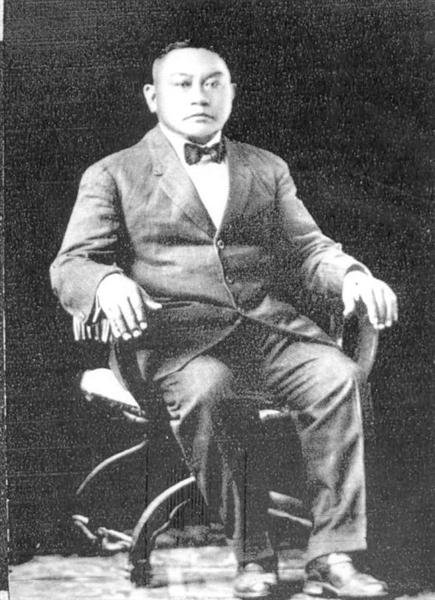
Like his contemporary Datu Piang, Ortuoste made a very
successful transition from Spanish to American rule. Unlike Piang, his
main assets were his ability to read, write, and speak Spanish as well
as local languages, and his familiarity with colonial as well as local
culture. Utilizing these attributes, Ortuoste became a highly effective
intermediary between the local representatives of colonial authority and
those who militantly resisted that authority. His singular personal
background made him an ideal cultural and political broker, negotiating
the subjugation of defiant local leaders to an occupying foreign power.
The
first reported occasion for Ortuoste's mediation occurred in 1904 when
he reportedly played a prominent role in dissuading Datu Ali from
attacking the American military garrison in what was then the town of
Cotabato (Millan 1952). Ortuoste's next recorded assignment for the
Americans was in 1914, when he assisted in negotiating the surrender of
Datu Alamada, an Iranun insurgent who had fought the successive colonial
regimes for twenty years in the mountainous area between Cotabato and
Lanao with a force of more than five hundred men (Gowing 1983).
American
administrators again sought the assistance of Ortuoste in 1923 as a
mediator in the surrender of another Iranun insurgent, Datu Santiago,
the last leader of resistance to American rule in Cotabato. Santiago had
rebelled against the imposition by the Americans of a head tax (cedula
), the compelling of Muslim girls to attend Christian schools, and the
practice by school authorities of using forced labor without
compensation to construct and repair school buildings (Hurley 1936; Tan
1982). Datu Adil remembers stories told by Ortuoste that, in this
instance at least, he played a double role, simultaneously assuring
colonial authorities of Santiago's imminent surrender and advising
Santiago on the concessions he should demand from the Americans in
return for his submission.
At some point after this, Datu Ortuoste
was accorded the title Datu sa Kutawatu (Datu of Cotabato) by His
Majesty Sultan Mastura, who was installed as Sultan of Magindanao in
1926. This was the reason why he was respected as one of the Royals of
the Maguindanao Sultanate that he had this title "His Royal Highness"
for the foreigners to greet or address him equivalent to the vernacular
way of greeting or addressing a Royal in the Sultanate of Maguindanao
and neighboring Sultanates (Smith, Roger and McArthur James, 1941 and
Dennis John, 1935).
Sometime after helping secure the surrender of
Datu Alamada he was also appointed assistant to the governor of
Cotabato. In his political career, Datu Ortuoste enjoyed considerable
influence among colonial administrators and gained the recognition of
the Muslim elite of Cotabato. He accumulated large tracts of property in
and around Cotabato City before he died, sometime before 1952. Two of
his sons became civil servants in Cotabato.

That Datu Ortuoste
was, in all important respects, a colonial creation is evidenced in the
exceptional title bestowed upon him by the reigning Sultan of
Magindanao. The office of Datu sa Kutawatu was unusual not only in that
it was newly created—the creation of new royal offices was uncommon but
not unheard of (see below).
It was also the first traditional
title that in its very nomenclature acknowledged colonial domination.
"Cotabato," after all, was the Spanish and American term for the
territory locally known as Magindanao. As the ceremonial Datu sa
Kutawatu; Datu Ortuoste personified the new colonial construct called
Cotabato. He was the first purely colonial datu.
One of Datu Ortuoste's daughters, Bai Jacinta Ortuoste y Delos Santos (right picture), a Tiruray blooded-lady married Don Regino Joaquin y Felix, a pharmacist from Calle Real, Tacloban, and Maasin, Leyte, The Philippines. Jacinta and Regino Joaquin were my maternal great grandparents.
One of Datu Ortuoste's daughters, Bai Jacinta Ortuoste y Delos Santos (right picture), a Tiruray blooded-lady married Don Regino Joaquin y Felix, a pharmacist from Calle Real, Tacloban, and Maasin, Leyte, The Philippines. Jacinta and Regino Joaquin were my maternal great grandparents.
Citation:
McKenna, Thomas M. Muslim Rulers and Rebels: Everyday Politics and Armed
Separatism in the Southern Philippines. Berkeley: University of
California Press, 1998.
Sources:
Reed, Thomas Royals of Mindanao & The Islands: 1935, Adamson University Library, Manila, Philippines
Smith, Roger and McArthur James The Colonial Royals of Mindanao. Manila: Maverick Press, 1941
Dennis, John The Oriental Royals. Manila: Maverick Press, 1935
If you're a descendant of His Royal Highness Datu Ignacio Ortuoste, feel free to click below and join us in Facebook.

If you're a descendant of His Royal Highness Datu Ignacio Ortuoste, feel free to click below and join us in Facebook.
Subscribe to:
Comments (Atom)